The origins and history of Calcio Storico Fiorentino
Florence is a city where history is everywhere, and Calcio Storico Fiorentino is one of its most authentic traditions. Half historical reenactment, half no-holds-barred challenge, this sport has its roots in the city’s glorious past, bringing together spectacle, tradition and passion.
Roots in the Middle Ages and the role of the nobility
The first structured records of Calcio Storico Fiorentino date back to the 16th century. Although it comes from ancient ball games from Roman times (harpastum) and the Middle Ages, it was during the Renaissance that “Calcio in livrea” took on a clear form, becoming an elite discipline practised mainly by young nobles and the sons of the city’s most prominent families.
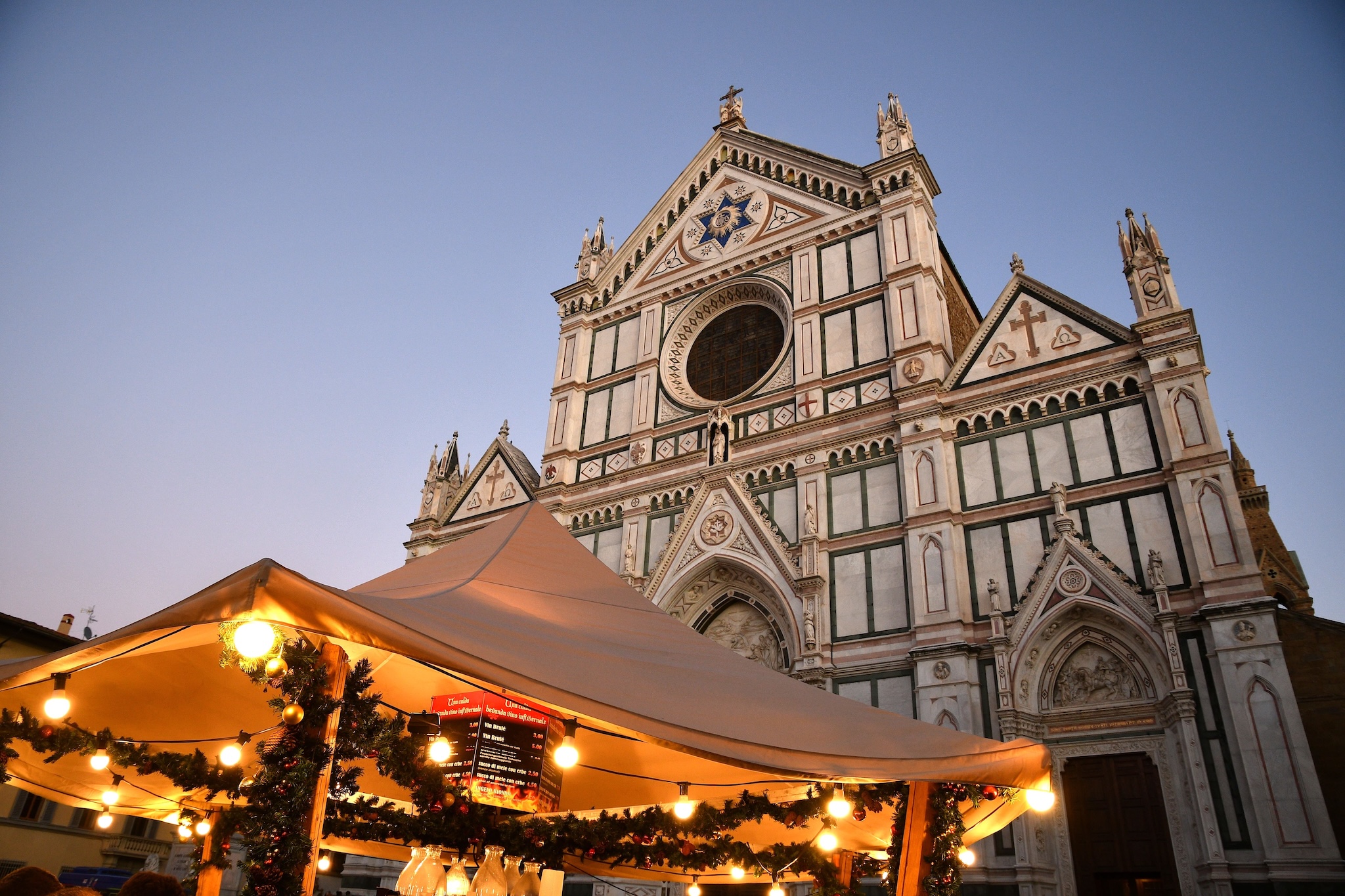
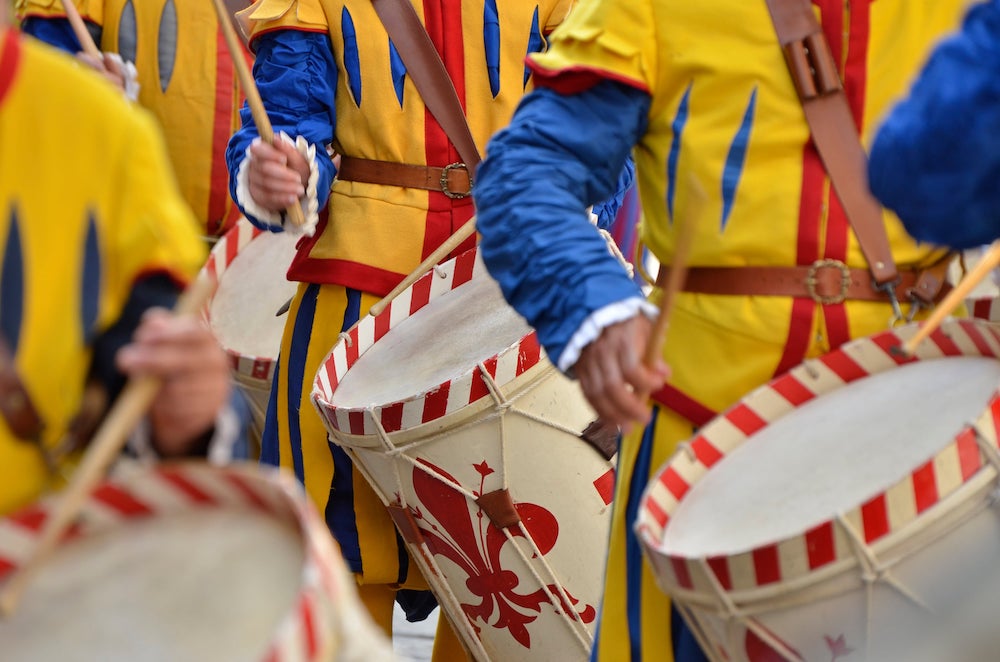
One of the most famous events took place on 17 February 1530, when Florence was under siege by the imperial troops of Charles V. Although the city was exhausted and in a critical situation, the Florentines decided to challenge the besiegers by organising a match in Piazza Santa Croce, complete with musicians, as if to show that the spirit of the Republic could not be broken. Since then, that match has been seen as an eternal symbol of Florentine pride and identity.
The game through the centuries and its modern evolution
Over the centuries, Calcio Storico Fiorentino has gone through periods of decline and revival. After being forgotten for some time, in 1930, to mark the 400th anniversary of the siege, the Municipality of Florence officially brought it back into the spotlight. Since then, it has become a regular June event, part of the celebrations for the feast day of Saint John the Baptist, the city’s patron saint.
Today, the tournament features four teams, each representing one of Florence’s historic districts:
Bianchi di Santo Spirito
Rossi di Santa Maria Novella
Azzurri di Santa Croce
Verdi di San Giovanni
Every year, the teams face off in two semi-finals, traditionally drawn on Easter Sunday, and a final that crowns the winner. The event draws spectators from all over the world, fascinated by its mix of history, tradition and proud fighting spirit.
The rules of the game: how a match works
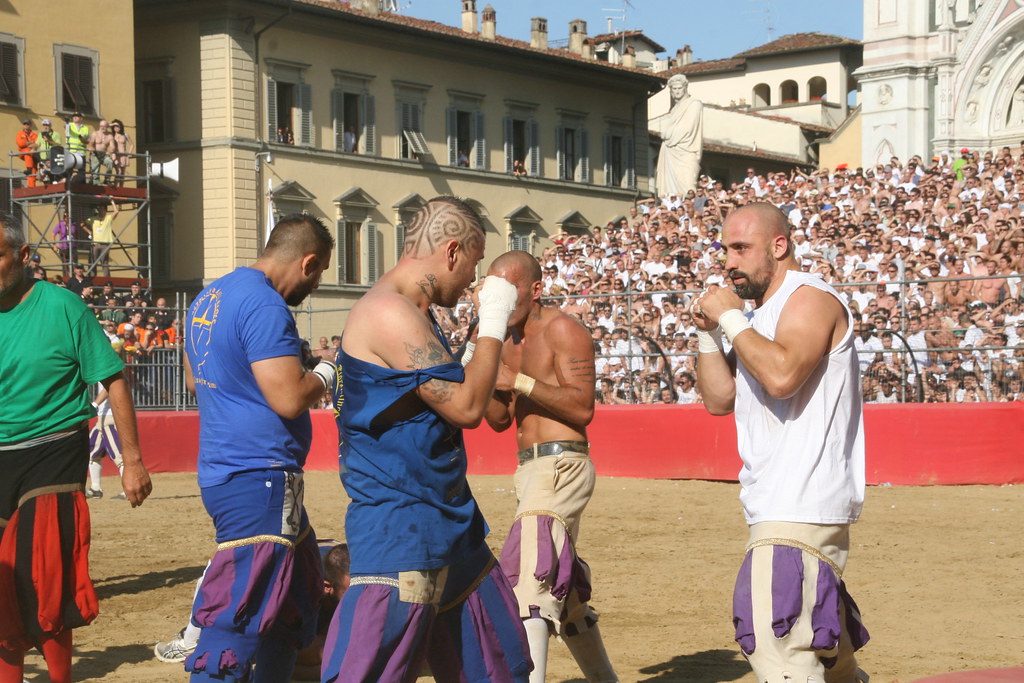
Thinking Calcio Storico Fiorentino is just an old version of modern football? Not quite. This game blends elements of football, rugby and wrestling, and follows a set of rules rooted in Renaissance tradition, with a few changes introduced over the centuries to make things safer for the players.
The historic rules and how they differ from today
Unlike what you might think, in the 16th century the game was anything but chaotic. In 1580, Giovanni de’ Bardi drew up a strict set of rules in 33 articles. The modern game is still based on that text, but today’s regulations include tight restrictions to prevent illegal moves, such as sneak attacks or group beatings against a single player on the ground, with immediate disqualification. This helps protect the safety of the participants while keeping the legendary intensity of the physical clash intact.
Duration, scoring and the role of the calcianti
A match of Calcio Storico Fiorentino lasts 50 minutes, with the teams facing each other on a rectangular sand-covered pitch set up in Piazza Santa Croce, the historic setting of this competition.
Each team is made up of 27 players, known as calcianti, divided into the following roles:
3 Datori Indietro (goalkeepers)
4 Datori Innanzi (full-backs)
5 Sconciatori (half-backs)
15 Innanzi or Corridori (forwards)
The aim is to score as many cacce as possible, by getting the ball over the opponent’s end line. However, if the shot goes off target and crosses the side line, half a caccia is awarded to the opposing team.
Unlike in the past, the modern rules allow a limited number of substitutions to replace injured calcianti. On the sand pitch, respect for the rules is ensured by the Giudice Arbitro, assisted by six Guardalinee, a Giudice Commissario and the Maestro di Campo, who oversees the general order of the match from outside the field.
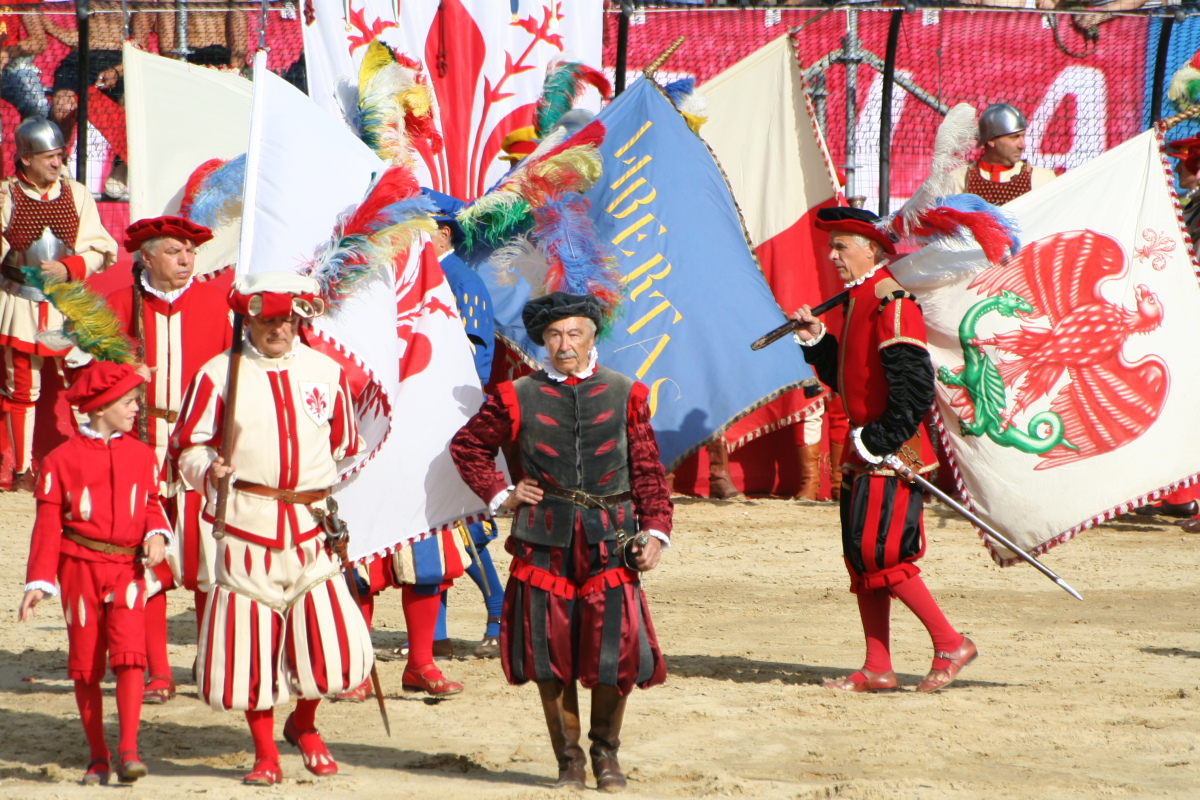
The teams and colours: who takes part in the tournament
Calcio Storico Fiorentino is a competition featuring four teams, each representing one of Florence’s historic districts. Every team carries centuries of tradition and a strong sense of belonging, turning each match into more than just a sporting challenge: it’s a matter of honour.
The Bianchi, Rossi, Azzurri and Verdi
The teams are divided according to the city’s historic districts and are recognised by the colours of their uniforms:
Bianchi di Santo Spirito: They represent the Oltrarno district, historically known for its proud, down-to-earth spirit. The Bianchi have a passionate fan base and a tradition of solid, strategic calcianti.
Rossi di Santa Maria Novella: They represent the north-western district of the city. They are traditionally known for their fighting spirit, pride and strong team unity.
Azzurri di Santa Croce: They practically play on home ground, as the tournament takes place in their square. The Azzurri are historically one of the most successful and technical teams, famous for the athletic power of their players.
Verdi di San Giovanni: They represent the geometric and religious heart of Florence, the area around the Duomo and the Baptistery. The Verdi stand out for their historical pride and energetic attacking play.
The 27 calcianti in each team are selected after months of tough athletic and combat training. The final is always played on 24 June, the feast day of Saint John the Baptist. The winning team traditionally receives a Chianina calf as a prize, now replaced by a symbolic award while the meat is donated to charity, along with the palio painted for the occasion.
Where and when to watch Calcio Storico Fiorentino
To experience something truly authentic and soak up the atmosphere of a centuries-old tradition, watching a Calcio Storico Fiorentino match is one of those Florence moments you won’t want to miss. Every year, the city turns into an open-air arena, where the four historic districts face off in a spectacular battle. But when are the matches played? And where can you buy tickets? Here’s everything you need to know to catch the event.
Match dates and the final
Calcio Storico Fiorentino takes place every year in June.
The main matches usually follow this schedule:
Semi-finals: Usually played over a weekend in the first half of June, around the second weekend of the month.
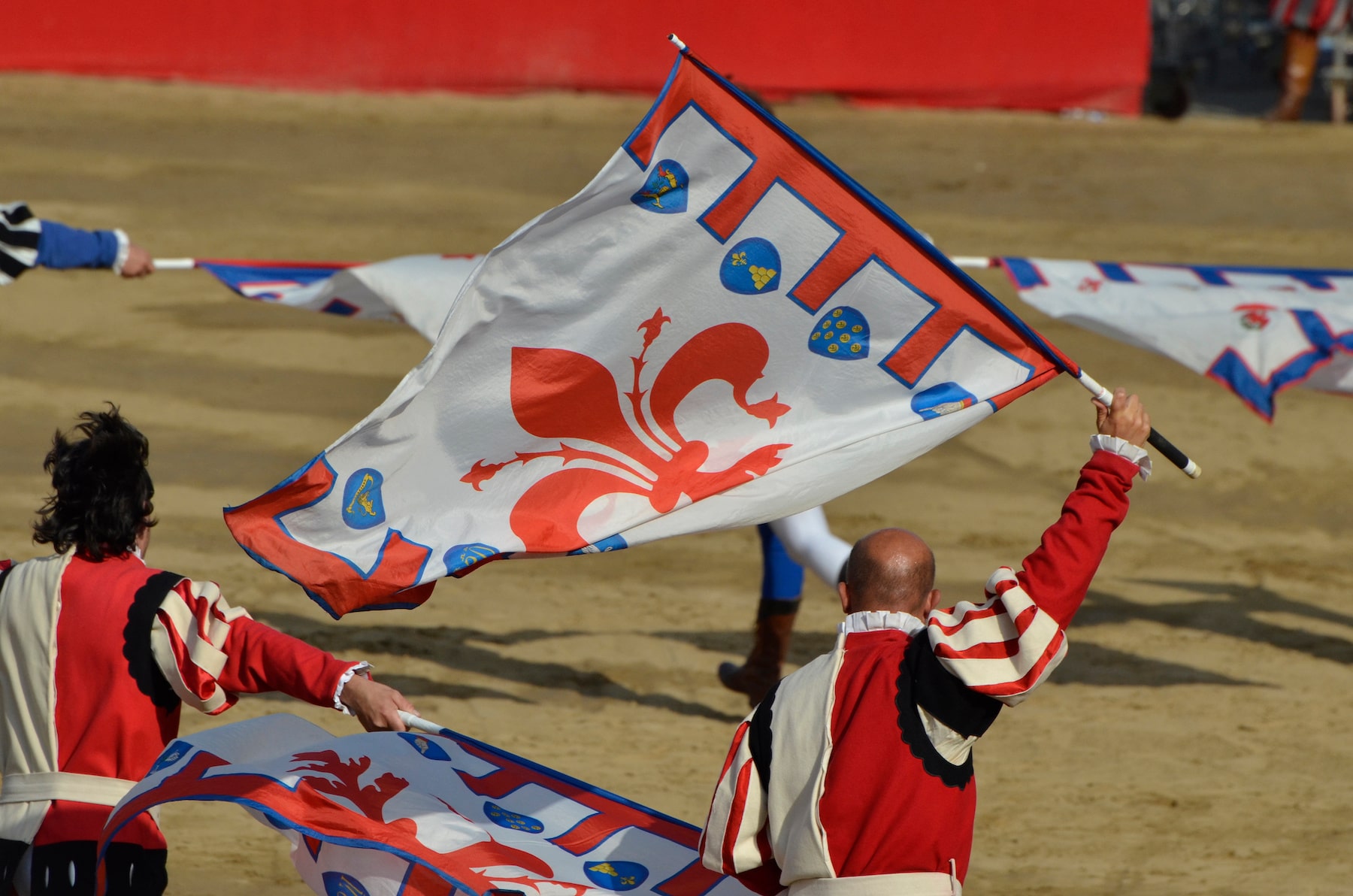
Final: Always played on 24 June, preceded by the spectacular Corteo Storico della Repubblica Fiorentina, a historic parade through the city centre with over 500 participants in Renaissance costumes.
All matches take place on the pitch set up in Piazza Santa Croce, the heart of the event.
Where to buy tickets
Tickets for the stands set up in Piazza Santa Croce are in huge demand, and getting hold of one can be quite a challenge. Prices vary from the more affordable stands, usually the curved sections, to numbered and covered seats.
In-person presale: Historically managed by BoxOffice Toscana, with its main office at Le Murate, in Via delle Vecchie Carceri.
Online presale: Available through official channels and authorised ticketing platforms approved by the Municipality of Florence, such as Ticketando. Tickets for the final usually sell out just a few minutes after sales open.
Watching the matches live or by streaming
Can’t make it to Florence during the event? You can still watch Calcio Storico Fiorentino live.
Local TV and streaming: Tuscan broadcasters, such as Toscana TV, show the matches free-to-air for local residents.
National and international platforms: In recent years, global live streaming has been handled by major sports networks, such as DAZN, allowing fans around the world to follow the tournament in high definition.
Social media and YouTube: highlights, interviews and key moments are often shared on the event’s official channels.
To really feel the unique atmosphere of Calcio Storico Fiorentino, seeing it live at least once is definitely worth it. The adrenaline, the cheering and the passion you feel in Piazza Santa Croce are truly one of a kind.
After a day packed with adrenaline and spectacle, hu Firenze camping in town is just the place to get some rest: a green oasis with a pool, restaurant and quality services awaits you for a stay all about relaxation.